
Documentary
Storytelling in action
Humans in 2026
Imagine looking at planet Earth as an outsider: that blue-and-white globe that has been orbiting the Sun for 4.5 billion years. More than four billion years after Earth was formed – around 235 million years ago – dinosaurs appeared, ranging from mighty carnivores such as Tyrannosaurus to colossal plant-eaters such as Brachiosaurus. About 66 million years ago, the dinosaurs became extinct.
An unimaginable amount of time later, about 300,000 years ago, modern humans – Homo sapiens – made their appearance. For the vast majority of those 300,000 years, humans lived as nomadic hunter-gatherers. It was only 12,000 years ago that people began to settle in permanent locations and ceased to live a nomadic lifestyle.
Since then, there have been many famous cultures and civilizations: the Babylonians, Egyptians, Ancient Greeks, Incas and Ottomans, to name just a few. Humans developed language, designed mathematical systems, unravelled the laws of nature, built helicopters and rockets, landed on the Moon, and invented the microscope, the polio vaccine, MRI scans, the internet and AI.
Unfortunately, there is also much that humans can’t do, or at least not yet: cure Alzheimer’s or Parkinson’s disease, eradicate cancer, end global poverty, prevent massive food waste, stop bullying in schools, bring peace to the world, eliminate child mortality, develop an economy that has a positive impact on nature instead of a harmful one, and so on.
With a Torch on a Crane
What is Homo sapiens up to these days, in 2026, after 300,000 years of evolution? Too much to capture in a single image, from baking cherry pies to manufacturing nuclear weapons. Yet, through my photographs, I try to document a small slice of what’s going on in society. I immerse myself in the most diverse environments and capture what I see, from Aalst Carnival to a military parade.
In recent years, I have often focused on two specific themes: political demonstrations and rave culture. Why these two? They are colourful enough to explore, from both a photographic and a sociological perspective. They are also different enough from each other to provide me with a broader range of impressions and stories: humans in highly diverse contexts.
My third, overarching theme is nature. Who are all these other creatures walking, crawling, flying, or swimming around here on Earth? Alongside the activist climbing a crane with a torch in her hand, the ecstatic raver dancing in a sweaty basement, or the strong javelin thrower breaking another record, I also photograph the wolf spider, the grasshopper and the jewel beetle.
Nature photography is fascinating not only because it allows you to discover a stunning universe, but also because it reminds you that humans are just one species among many. Like starlings, sturgeons and bison, we are part of the natural world. It would be great if we could pass on that nature – on which we all depend – in a better condition than we found it.
Below you’ll find my photo reports, ranging from farmers’ protests and marches against the animal industry to national strikes, rallies against antisemitism and a gathering following the death of Fabian. Making these photo reports teaches me something about the times we live in and helps me stay in touch with current events, so that my thinking doesn’t develop in a vacuum or an echo chamber, but in the midst of a vibrant society.

Nature
As a nature photographer, I follow the...
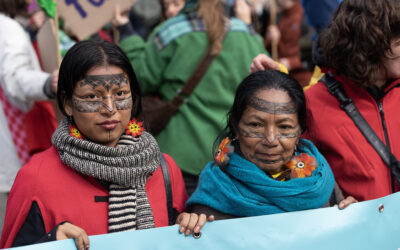
Climate march 2025
On Sunday, 5 October 2025, the Climate...
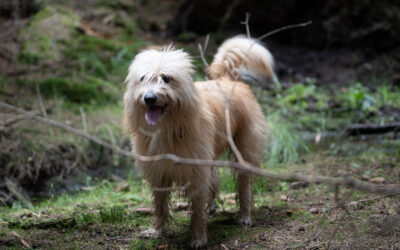
Looking for the wolf
Jalhay, 17 September 2025
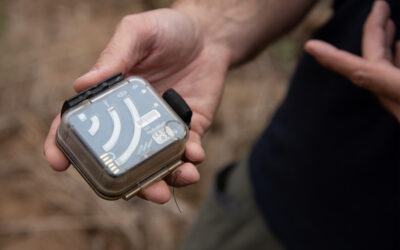
AI-monitoring Semois Valley
Bouillon/Vresse-sur-Semois, 27 august 2025

Release of 6.500 sturgeons
Belene, Bulgaria, 29 July 2025
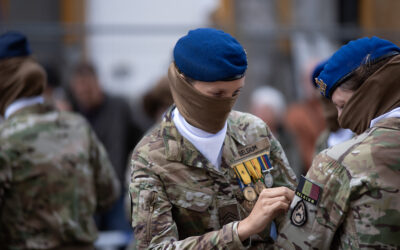
Military parade
Brussels, 21 July 2025

March against the animal industry
Brussels, 29 June 2025

Red line for Gaza
Brussels, 15 June 2025

Death of Fabian (11)
Brussels, 3 June 2025

Warehouse rave
Anderlecht, 5-6 April 2025

In search of the otter
Blaasveldbroek, 16 April 2025

Investing in nature pays off
Kastanjebos (Herent), Plateau des...

Tour of Flanders Cyclo
Berendries, 6 April 2025

National strike (2)
Brussels, 13 February 2025

National strike (1)
Brussels, 13 February 2025

New Year’s Dive
Ostend, 4 January 2025

Elections in France
Paris, July 2024

Antifa in Bxl
Brussels, June 2024

Rally against antisemitsm
Antwerp, June 2024

Farmers protest
Brussels, February 2024

Against the war in Gaza
Brussels, December 2023

In the field with WWF
Belgium, since June 2023

WWF at the climate march
Brussels, December 2023

Climate march
Brussels, December 2023
Doel 2023
East Flanders, August 2023

XRDS
Brussels, August 2023

March against the animal industry
Brussels, June 2023

Horst Arts and Music
You know what’s so nice about Horst? You...

‘I wanted to be free, but (…)’
You could see the fire burning in Kimia’s eyes during the...

Woman, Life, Freedom
‘May I ask you a few questions?’, I ask...

What’s that Pride about?
‘I need to be careful that my parents don't find out I'm...

Huggers and Trumpists
A woman in her fifties lies motionless on the ground,...

Black Lives Matters
Montreal, May and June 2020